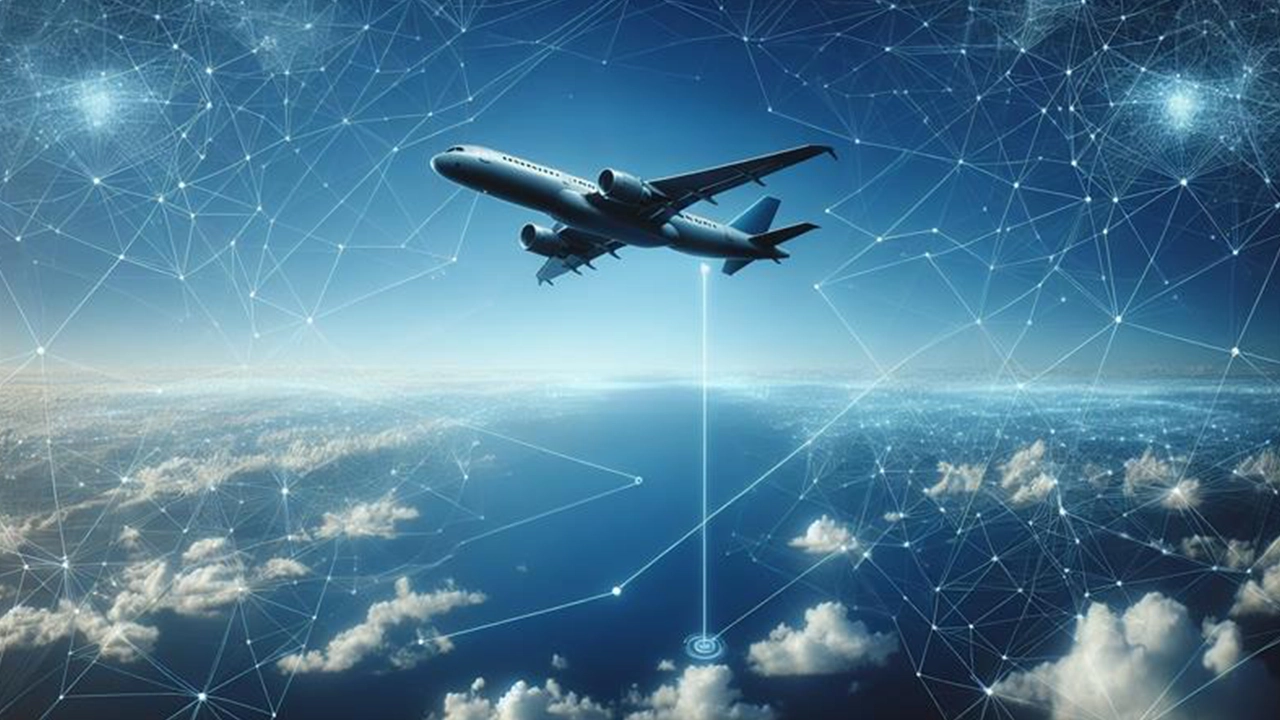
The aviation industry has always operated under a strict mantra: Safety First. But in today’s hyper-connected environment, safety is no longer defined only by mechanical reliability or pilot skill — it is equally shaped by the resilience of digital systems that keep aircraft, airports, and air traffic moving.. For generations, this has meant prioritizing mechanical integrity, pilot proficiency, and the rigorous control of physical airspace. The measure of success was often speed, efficiency, and the safe, timely arrival of aircraft. “Airspeed.”
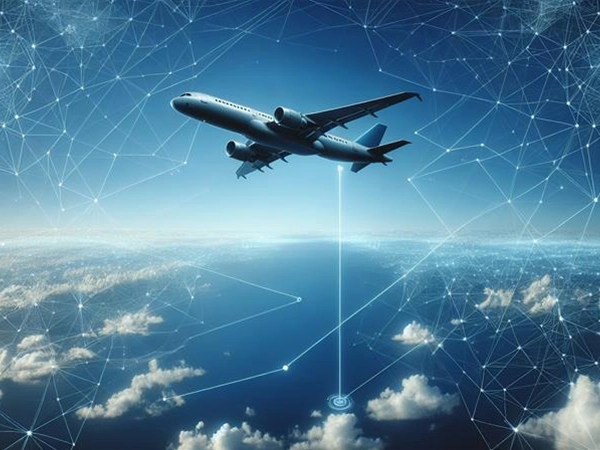
Today, however, a profound digital transformation is underway — one that is redefining how aviation safety, reliability, and trust are measured.. Our skies are no longer just metal and air; they are interwoven with terabytes of data, interconnected networks, and sophisticated digital systems. From advanced Air Traffic Management (ATM) to connected aircraft and digital communication protocols, the very fabric of flight is increasingly digital. And with this evolution, the most critical metric for security and reliability has shifted.
In the digital skies, vigilance — not speed alone — is the new airspeed. The phrase signifies a fundamental change in priorities. While physical speed still matters, the swiftness of our response to a cyber threat, our vigilance is now the ultimate determinant of safety and operational continuity. A mechanical failure might ground one plane; a cyber breach could paralyze an entire network of air traffic control, airports, and thousands of flights globally.
The New Vector of Threat
The digitalization of aviation, while offering immense benefits in efficiency, capacity, and sustainability, has simultaneously introduced an entirely new class of risk.
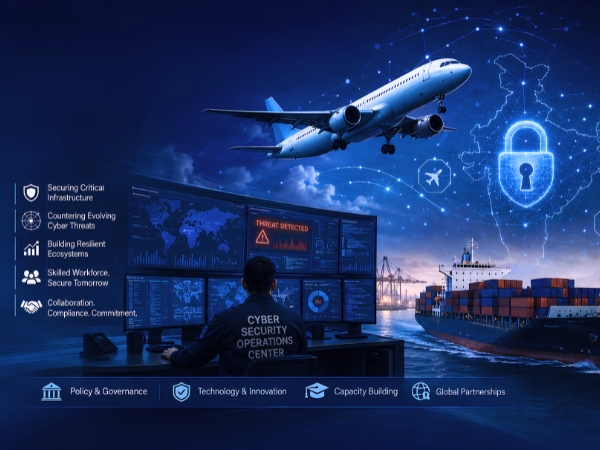
- Interconnected Systems: Modern ATM (Air Traffic Management) relies on System-Wide Information Management (SWIM) to share data seamlessly between air navigation service providers (ANSPs), airlines, and airports. This interconnectivity is a double-edged sword. A successful attack on a single component — such as a third-party maintenance or data-exchange system — can ripple across the entire aviation operational ecosystem..
- The Rise of Unmanned Aerial Systems (UAS) / Drones: The proliferation of drones requires a new layer of Unmanned traffic management (UTM) and poses fresh security challenges, from unauthorized flights near airports to potential jamming or spoofing of navigation signals. The “digital sky” platforms managing this new traffic are critical infrastructure and must be hardened against attack.
- Targeting Data, Not Just Aircraft: Threat actors are not always aiming to crash an aircraft; more often, they target data, operational continuity, and trust — assets that are equally critical to flight safety.. They are often after valuable intellectual property, confidential passenger data, or simply looking to hold critical operations for ransom (ransomware attacks). Disrupting ticketing, reservation, or flight planning systems can inflict massive financial and reputational damage.
Trading Reaction for Proaction
The speed of a cyberattack is measured not in knots, but in milliseconds — often faster than traditional defenses can react.. A breach can occur, data can be exfiltrated, or a system can be compromised before an outdated defense even registers the anomaly. This is where vigilance becomes paramount:
- Continuous Monitoring: Unlike traditional security that focused on building a strong perimeter, digital vigilance requires non-stop monitoring of networks, endpoints, and data flows. Automated tools, often powered by AI, must instantly analyze logs, user behavior, and traffic patterns to detect and flag suspicious activity in real-time.
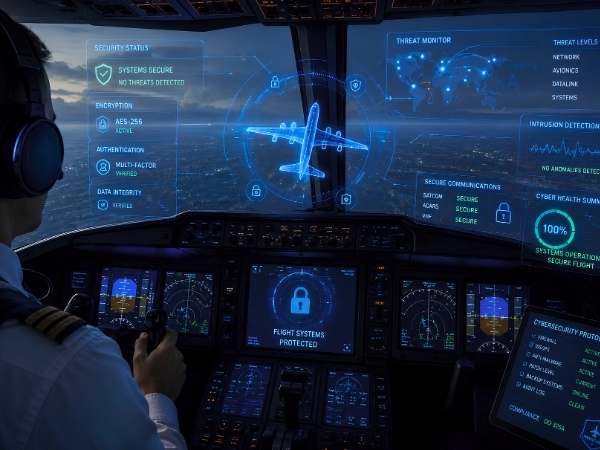
- Security by Design: True vigilance starts at the drawing board. New digital systems — from aircraft avionics to airport IoT platforms — must be designed with cybersecurity integrated from the ground up, rather than added as a reactive control after deployment, not merely bolted on as an afterthought.
- The Human Firewall: The most sophisticated technical controls can be undermined by human error. Comprehensive and frequent cybersecurity training for all personnel — pilots, air traffic controllers, engineers, IT teams, and executives — is non-negotiable.. The ability to recognize a phishing attempt or follow a secure protocol is a critical layer of defense.
- Cyber Resilience: Vigilance isn’t only about preventing attacks; it is equally about rapid detection, containment, and recovery to ensure continuity of critical aviation services.. It means having a detailed, practiced plan to contain a breach, isolate the threat, and restore critical services quickly. The goal is to emerge from an incident stronger, with lessons learned instantly integrated back into the system’s defenses.
Conclusion
The future of aviation is digital, and the commitment to safety must adapt accordingly. The familiar speed and efficiency of our operations i.e our “airspeed” are now entirely dependent on the intensity and responsiveness of our digital defenses.
For air navigation service providers (ANSPs), airlines, manufacturers, and regulators, the message is clear: vigilance must become a core operational and governance imperative, aligned with safety management and regulatory expectations.. The era of passively managing risk is over. Only through constant, proactive, and system-wide vigilance can we ensure that the digital skies remain the safest space for human travel, keeping our industry not just flying, but securely soaring. Because in the digital skies, the organizations that detect fastest, respond smartest, and recover strongest will define the future of safe flight.