The hum of jet engines is no longer the only force defining modern aviation. Beneath the sleek exteriors and connected cabins, a complex ecosystem of data and digital systems is continuously operating. As the aviation industry advances toward AI-driven cockpits, wireless avionics, connected aircraft, and cloud-based aircraft maintenance, one reality has become undeniable: aviation cybersecurity is no longer optional; it is mission-critical to flight safety and operational resilience.
It’s not just about protecting a screen; it’s about safeguarding every link in a digital chain that keeps planes in the air and passengers safe.
The Aircraft: A Network in the Sky
Gone are the days when an aircraft operated as a collection of isolated mechanical and electrical systems. Today, modern aircraft function as sophisticated, interconnected Internet of Things environments. From cockpit Multi-Functional Displays to wireless passenger entertainment systems and flight control units, nearly every aviation system is digitally connected.
While this connectivity improves operational efficiency, real-time diagnostics, and passenger experience, it also expands the aviation cyber threat landscape. The convergence of Operational Technology and Information Technology has created new security challenges for airlines, airports, and aerospace manufacturers.
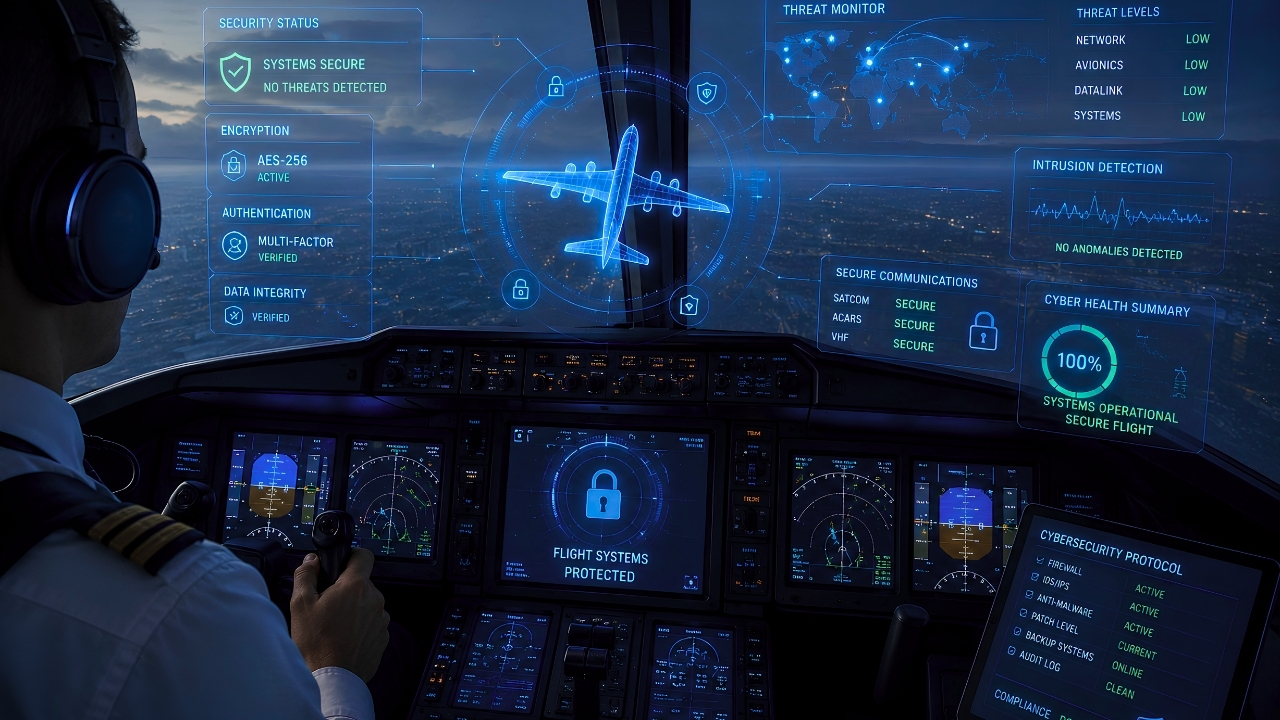
The Future Focus: The future of aviation cybersecurity will rely heavily on Zero Trust Security frameworks. In a Zero Trust aircraft architecture, every component, connection, user, and data flow must continuously verify its legitimacy before gaining access. Micro-segmentation across aircraft networks can help isolate cyber threats and prevent attackers from moving from non-critical systems to flight-critical operations. This layered cybersecurity approach strengthens cyber resilience and enhances overall aviation safety.
Cloud-Based Aircraft Maintenance & Aviation Data Security
The shift toward cloud-based aircraft maintenance is transforming aviation operations through predictive maintenance, real-time monitoring, and optimized servicing schedules. However, this digital transformation also extends the aviation security perimeter far beyond the hangar.
Sensitive aircraft health records, maintenance logs, and airworthiness data are now shared across airlines, MRO providers, OEMs, and third-party vendors through distributed cloud environments. As a result, aviation data security and supply chain cybersecurity have become critical priorities for the aerospace industry.
The Future Focus: Securing this vast ecosystem requires a radical approach to supply chain cybersecurity. We need robust standards and verifiable compliance across every single partner in the maintenance value chain. Blockchain technology could play a role in creating immutable, auditable records of every repair and component change, ensuring data integrity and thwarting the injection of malicious code during software updates or maintenance.
AI in Aviation: The Double-Edged Sword in the Cockpit
The integration of AI in aviation is expected to revolutionize flight operations, pilot assistance systems, fuel optimization, and anomaly detection. AI-driven cockpit technologies can significantly improve operational efficiency and decision-making.
However, AI also introduces new cybersecurity risks. Threat actors may attempt data poisoning attacks, manipulate AI training models, or interfere with real-time AI inputs to disrupt aviation systems and flight operations.
The Future Focus: It’s not enough to protect the systems running the AI; we must protect the AI itself. Adversaries could attempt data poisoning, feeding corrupted information to the AI during its training phase, subtly altering its decision-making. Or, they might try to manipulate its inputs in real-time, leading to incorrect recommendations or actions.
The future demands “Trusted AI”: AI systems that are resilient to manipulation, transparent in their decision-making, and continuously validated for integrity. Cybersecurity will be integral to ensuring that our AI co-pilots remain allies, not vulnerabilities.
Collaboration is Key
Aviation cybersecurity is no longer a niche concern; it is now a core pillar of aviation safety, digital transformation, and operational continuity.
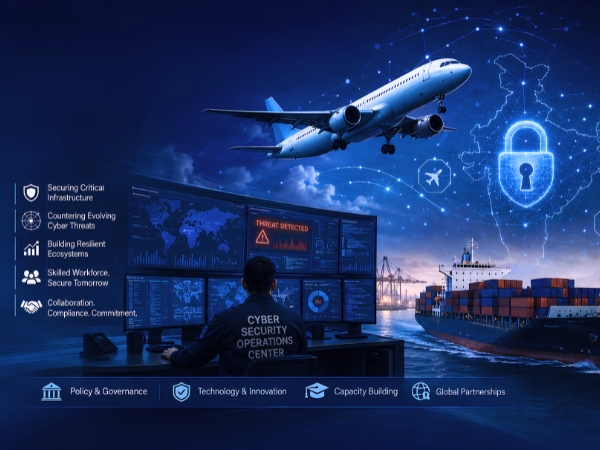
Building secure and resilient aviation ecosystems requires close collaboration between airlines, airports, aerospace manufacturers, defence organizations, regulators, and cybersecurity specialists.
By strengthening cybersecurity frameworks, improving threat intelligence sharing, and investing in cyber resilience, the aviation industry can safely embrace the connected future of flight.
Closing note:
The future of aviation will not be defined solely by speed, efficiency, or innovation but by trust, resilience, and security. As aircraft become increasingly connected and intelligent, cybersecurity must evolve from a supporting function into a foundational pillar of aviation safety. Protecting the skies of tomorrow will require continuous collaboration, proactive defense strategies, and a shared commitment to securing every digital layer of modern flight.